
Anxiety has a way of making your mind feel like it’s running twelve tabs at once, all of them loud. If you’ve ever sat down hoping to relax and instead spiraled into a list of everything that could go wrong, you already know meditation isn’t as simple as “just breathe.” But done right, it can genuinely become part of a real anxiety treatment plan, not a replacement for professional care, but a tool that works alongside it.
Why Meditation Actually Helps With Anxiety
Anxiety often shows up as your mind racing ahead, replaying conversations, or bracing for something that hasn’t happened yet. Meditation works by gently pulling your attention back to the present moment, where most of those imagined threats simply don’t exist.
Research backs this up. Mindfulness-based programs have been shown to reduce anxiety symptoms and even lower relapse rates for related mood conditions. One study out of the University of Waterloo found that just 10 minutes of breathing-based meditation helped anxious participants focus better on demanding tasks immediately afterward. None of this means meditation cures anxiety outright, but the evidence for it as a supportive piece of anxiety treatment is genuinely encouraging.
Getting Started: The Basics That Actually Matter
You don’t need a mountain retreat or an hour of free time to start. A few fundamentals make the biggest difference for beginners, especially if meditation is a brand-new anxiety treatment for you.
Find a consistent, low-pressure spot
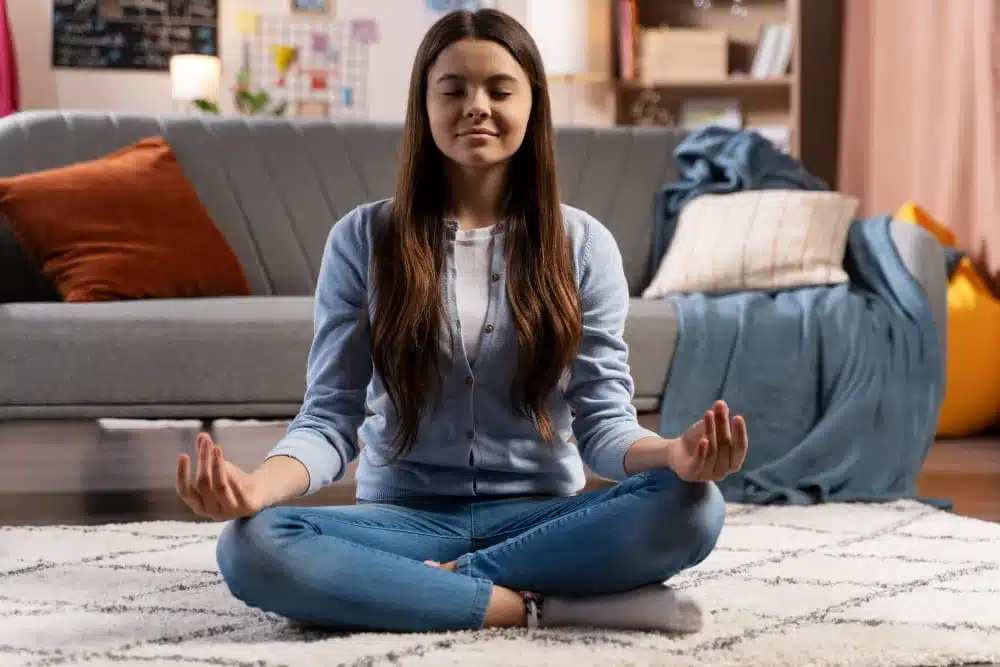
Sit somewhere quiet, feet flat on the floor, hands resting comfortably. You don’t need candles or incense, just a spot where you won’t be interrupted for a few minutes.
Start smaller than you think you should
Five to ten minutes is plenty when you’re starting out. Trying to meditate for 30 minutes on day one often backfires, leaving people frustrated instead of calmer.
Let go of the goal of “emptying your mind”
This is where a lot of people give up too soon. Meditation isn’t about having zero thoughts; it’s about noticing when your mind wanders and gently bringing it back, over and over, without judging yourself for wandering in the first place.
Breathing Techniques Worth Trying
Breathwork is often the easiest entry point into meditation, especially when anxiety has your breathing shallow and quick to begin with.
- Diaphragmatic (belly) breathing: Place one hand on your chest and one on your belly. Breathe in slowly through your nose until your belly rises, then exhale slowly through pursed lips. This counteracts the fast, shallow breathing anxiety tends to trigger.
- Box breathing: Inhale for a count of four, hold for four, exhale for four, hold for four. Repeat for several rounds. The steady rhythm gives your mind something structured to focus on.
- Extended exhale breathing: Inhale through your nose, then exhale for roughly twice as long through your mouth. Longer exhales are linked to a calmer nervous system response, which is part of why this technique shows up so often in anxiety treatment recommendations.
Any of these can be practiced on their own or folded into a longer meditation session, whichever feels more manageable on a given day.
A Simple Meditation You Can Try Today
If you’re not sure where to start, here’s a straightforward practice worth trying as a low-pressure anxiety treatment on its own:
- Sit comfortably and close your eyes, or soften your gaze downward.
- Take a few slow, deep breaths to settle in.
- Bring your attention to the physical sensation of breathing, the rise and fall of your chest or belly.
- When your mind wanders (it will, and that’s normal), gently notice the thought without judgment and guide your focus back to your breath.
- Continue for 5 to 10 minutes, gradually increasing the time as it feels more natural.
- Open your eyes slowly and take a moment before returning to whatever’s next.
Consistency tends to matter more than duration. A few minutes daily builds the skill far better than one long session once a week.
When Meditation Alone Isn’t Quite Enough
It’s worth being honest here: meditation is a helpful tool, but it isn’t a cure, and it may initially feel uncomfortable rather than calming, especially if it draws more attention to anxious thoughts at first. That reaction doesn’t mean it’s failing, but it also doesn’t mean it’s the only anxiety treatment you need.
For a lot of people, meditation works best as one piece of a broader anxiety treatment approach that might include therapy, medication, or other structured support.
If anxiety is significantly interfering with your daily life, relationships, or work, that’s a strong signal it’s time to talk to mental health services rather than trying to manage everything solo through breathing exercises alone.
Building a Sustainable Practice
The people who stick with meditation long-term usually aren’t the ones with the most disciplined willpower; they’re the ones who made it easy to repeat. Working alongside mental health services along the way often makes that consistency easier to maintain, too.
A few things that help:
- Practicing at the same time each day, even if it’s brief
- Using a guided app or recording when your mind feels especially loud
- Pairing meditation with an existing habit, like right after brushing your teeth
- Giving yourself grace on days it feels hard or doesn’t happen at all
Anxiety treatment isn’t about perfection; it’s about building tools you can actually reach for when things get hard, meditation being one option among several worth having in your back pocket.
Finding the Right Support for Your Anxiety
Meditation can genuinely help, but it works best alongside real professional guidance, not instead of it. At Polished Mind Psychiatry, our team helps you build a comprehensive plan that fits your specific experience with anxiety, whether that includes therapy, medication management through mental health services, or lifestyle tools like meditation working together. Explore our full range of services and find the kind of support that actually meets you where you are.